Let me start by saying that this post wasn’t easy to write, because the definition of what constitutes “low fantasy” isn’t exactly enshrined anywhere in our collective consciousness. In fact, the sub-genre of “low” fantasy seems to mean something different to lots of people. However, the definition that I subscribe to is the following: a low fantasy book is a story where the fantastical/magical elements are less prevalent than at the other end of the scale (high fantasy). In short, these are books which follow human characters dealing with human problems, with moments of fantasy or magic intruding on their otherwise known and quantifiable existences. You with me? Phew, good! Now that’s out of the way, here are the best low fantasy books you can read:
A low fantasy book is a story where the fantastical/magical elements are less prevalent than at the other end of the scale (high fantasy). Low/high relates to how normalised magic is in the world, with “low” meaning it’s uncommon and “high” meaning it barely raises an eyebrow among the characters involved.
Steve Pannett, author’s definition of ‘low fantasy’
The Winter King
The first book of The Warlord Chronicles, Bernard Cornwell’s Arthurian rework is probably the best example of low fantasy you will find.
Set in Dark Age Britain, the story borrows heavily from the classic Arthurian myths, but strips away plenty of the mystique to leave little but mud, blood and a bitter struggle for power. The battles are visceral, the characters—including Arthur himself—are deeply flawed and innately human. Their entanglements are both complex and feel very real.
Historical fantasy is adjacent to—if not directly on top of—low fantasy, and it’s very much Bernard Cornwell’s wheelhouse. Better yet, if you enjoy the book then The Winter King is the start of something epic.
The Hunter’s Lament
A gritty, fast-paced novel that follows the world-weary Bitter Sweet and his company of veteran bounty hunters. The team are tasked with tracking down a fugitive prince on behalf of a war-torn kingdom’s new management. Though their new employer is a magicker, and magick does make an appearance in the final act of the book (albeit in a mysterious/dangerous capacity) the majority of the story is very much low/no fantasy.
Sweet and his crew are deeply flawed and very human, as are the various characters they encounter on their hunt for the runaway prince. The low fantasy story is action-packed, but not shallow, and is perfect for fans of Joe Abercrombie, who coincidentally features next on this list…
The First Law books
I’m not sure I can say much more about these books than I (or anybody else, for that matter) have already said before. But, in case this is your first time reading my posts, let me assure you that the hype for these books is well-earned.
And I don’t just mean the first trilogy, either. All nine full-length novels are fantasy stories, but where magic is a suspicious and terrifying thing. People in the First Law universe prefer to trust steel over sorcery, though there is just enough of the latter to keep you on your toes. If you like your reading with plenty of grit, The First Law is where you should start.
The Lies of Locke Lamora
Another book I heartily recommend to anyone who likes their fantasy with lashings of dark humour, grim settings and twisted character arcs. I’ve recommended the entire Gentlemen Bastards sequence at length before, but The Lies of Locke Lamora is the best of the bunch. Helpfully, it’s also the beginning of the aforementioned sequence.
Camorr is one of the greatest realisations of a fantasy city ever written, and though there is plenty that’s fantastical about it, you are kept firmly in the gutter of the criminal underbelly throughout the telling of the story. If you like your grit with a dollop of wit, this book is for you.
Legend
Arguably one of the greatest fantasy novels ever written (or so sayeth this author, at least), I class David Gemmell’s 1984 debut, Legend as low fantasy in the same way that the vast majority of his catalogue of work is. Simply put, the magic is never explained. There is no underlying system and no technical machinations that are discernible (or at least none the author deems worthy of his readers’ attention).
Magic or fantastical elements are slightly more prevalent in some of his books, but Legend is one of the closest you’ll get to “low fantasy” by the definition I subscribe to. Yes, there are mystical warrior priests and dark shamanic forces, but these are eclipsed by the—very human—courage of the defenders of Dros Delnoch. Theirs is the real crux of this story, and is why it makes this list. The terrified and reluctant Regnak, the out-of-his-depth Orrin and, of course, the eponymous Druss the Legend.
Conclusion
Fantasy doesn’t need encyclopaedic knowledge of an imagined world, creatures or magical systems in order for it to be incredible. All of those things are great, if that’s how you like your storytelling. But for those of us readers who enjoy the grittiness of humans thrown up against such unknowns…low fantasy will always be there!
If you’ve got a low fantasy book recommendation then I’d love to hear it, as I’m always looking to expand my own library! Please drop a comment below or reach out via social media!
📚✌🏻SP
Share this post
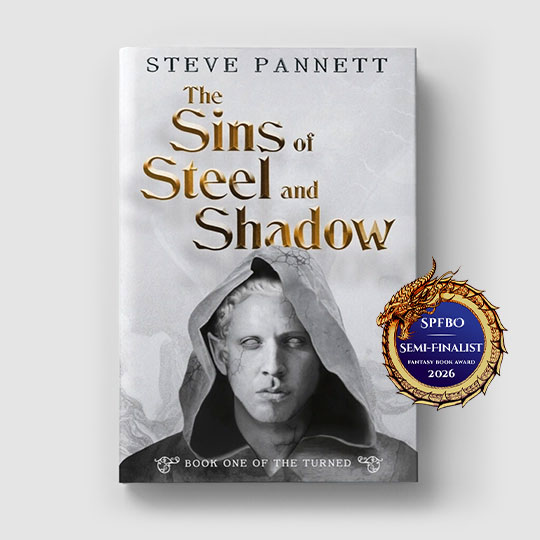
Book One of the TURNED
The Sins of Steel and Shadow
Hated and reviled by humans and vampyrs alike, every day for a Turned is a deadly struggle. But when Bail is offered the chance of a lifetime, there’s much more at stake than just his survival.
The Turned series is a fast-paced, character-led, gritty fantasy saga for fans of Joe Abercrombie or Scott Lynch.

Steve Pannett is an author and designer based in Yorkshire, UK.
He writes primarily in the fantasy genre, combining character-led storytelling with epic, gritty world-building to create dark tales with plenty of action and lots of twists along the way.
He has self-published multiple books and is active online.