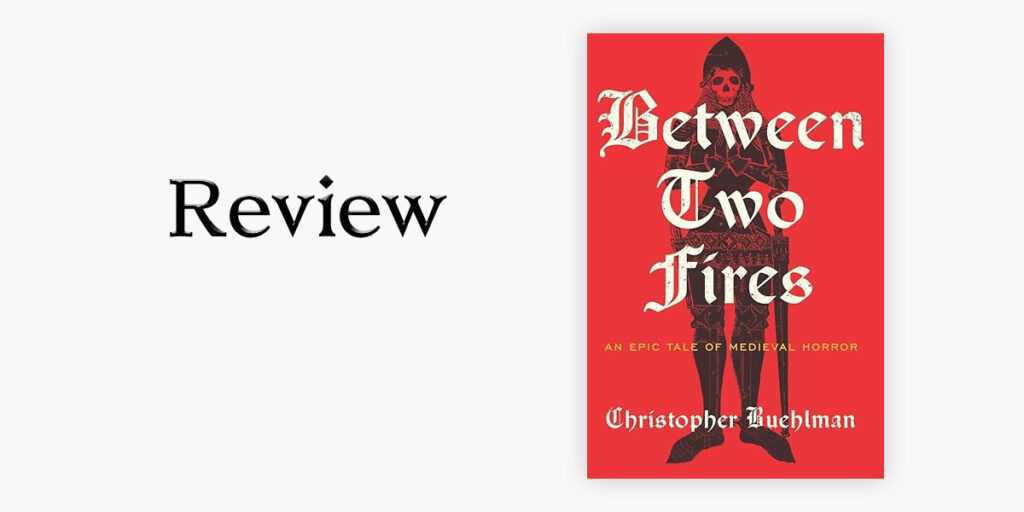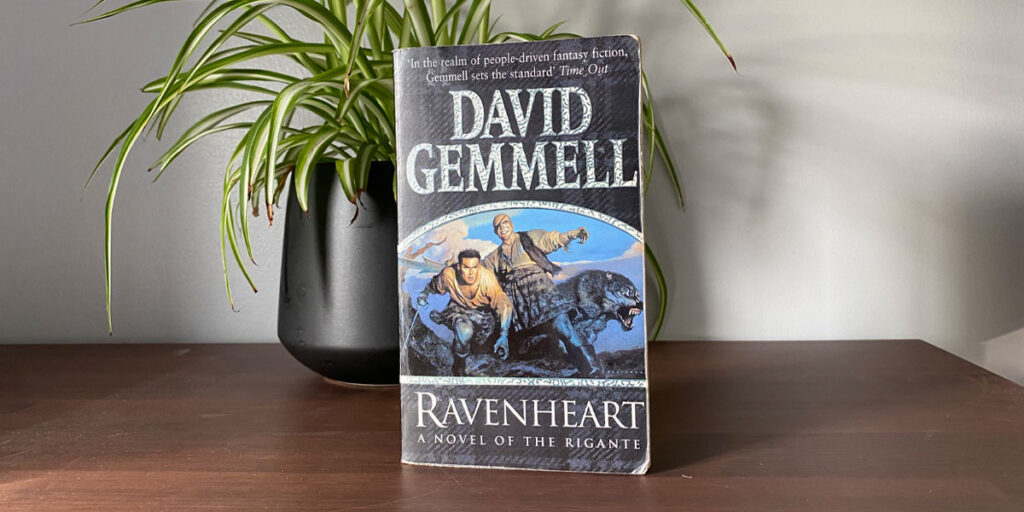
I’ve made no secret of the fact that I think David Gemmell’s Rigante series is one of the best fantasy series out there. I’ve even made a case for it being the best Gaelic-inspired fantasy series ever written. Well now I’m going in deep, book-by-book, to give you—dear Reader—an idea of what to expect from these epic instalments. I’ll start by linking to my reviews of the other books in the series, and then let’s dive into my review of book three in the series, Ravenheart.
- Sword in the Storm review (Book 1 of the Rigante)
- Midnight Falcon review (Book 2 of the Rigante)
- Stormrider (Book 4 of the Rigante)
The premise
Before I begin, it’s important to highlight that the Rigante series is probably better described as a pair of duologies. Sword in the Storm (Book 1) and Midnight Falcon (Book 2) follow two generations of Rigante in an era that can roughly be described as the Iron Age. More specifically, it’s a fantasy retelling of the late period of the Roman Republic. Although in his books, Gemmell’s empire is that of Stone (Rome) and the Rigante are one of many fictional tribes who live in his fantasy equivalent of Scotland.
Ravenheart, by contrast, is set around eight centuries later. If you were to categorise it in a sub-genre of fantasy then most people would opt for flintlock fantasy – because the book contains muskets, cavalry charges and canons. After all, 800 years of time means a lot will change.
What hasn’t changed, though, is the core of the Rigante way. Though the Keltoi (Celtic) tribes are now largely oppressed by the domineering Varlish (English), they remain connected to nature and are fiercely protective of their ancient culture. I bring all of this up because I know that some readers find themselves a little disappointed by the sudden time-jump. These readers loved the first two books, but expected more of the same from the last two. I can say this with certainty, because I used to be one of those readers.
Now though, I think Gemmell saved the best for last.
The review
The Rigante, and all of the Keltoi tribespeople, are a repressed people. The Varlish, headed up in the northern part of the country by the dreaded Moidart, rule the land with an iron fist. They quash Rigante culture, both in a physical sense, and in the rewriting of history to suit their own legacy. Relationships between the Varlish and the Rigante are strained, at best. And we are introduced to this tinderbox through the lens of our main character, Kaelin Ring.
Kaelin is the son of Lanovar, a swashbuckling rebel leader who was killed by the treacherous Moidart. It is heavily hinted that Lanovar—and, by association, Kaelin—are direct descendents of both Connavar and Bane. This theme of lineage and heritage is present across other parts of the story, too, but I won’t spoil them here.
Orphaned, Kaelin is rasied by his Aunt Maev, Lanovar’s sister. Also present in his early life is Jaim Grymauch, a larger-than-life Rigante rebel and Lanovar’s closest friend. Jaim is a one-eyed drinker and a thief, but he also has a heart of gold. He is, as Gemmell writes in Rigante parlance, a man to walk the mountains with.
The setting for Ravenheart (Kaelin’s soulname, to continue the tradition of how the titles of the Rigante books work) is a fantasy version of the late 1700s in northern England. It is both remarkably bleak and touchingly hopeful. Gemmell does an expert job of writing an oppressed people, showing not just the physical violence and restrictions made against the Rigante (strict rules on not being armed, or what colour tartan they can display) — but also showing how pervasive oppression is across the spectrum. At his mixed Varlish/Keltoi school, Kaelin is taught rewritten histories that paint Connavar as a Varlish legend, rather than a Rigante icon. This attention to detail really brings alive the plight of a culture that is slowly being suffocated by its oppressors.
The story moves along quickly, too. The tinderbox of tensions between Varlish and Keltoi quickly erupts, forcing both Kaelin and Jaim into exile even further north. Here, they encounter the last vestiges of truly free tribespeople—the Black Rigante. These outlaws live deep in the highlands, and the tension with the Varlish in the area is even more palpable in the second part of the book.
There are two main reasons I recommend this book to pretty much every reader I meet. The first is because the book is so tightly written. It is a genuine masterpiece in storytelling. Not only do we follow Kaelin and Jaim as they head north, but we’re also shown the rapid detoriation of Varlish/Keltoi relationships further south, too. Maev Ring, Kaelin’s aunt, has her own storyline that is absolutely gripping, and leads to one of the most epic climaxes a fantasy book has ever delivered.
The second reason is the characters. Usually in a David Gemmell book, I will praise the primary cast of characters to the high heavens, but will freely admit that the secondary group are usually just that…secondary. Not so, with Ravenheart. Every single character—and I really do mean every character—is so sharply realised that, by the end of the story, you will feel like you know fifty more people, inside and out.
Don’t believe me? Read the book, then let me remind you that it contains: Kaelin Ring, Jaim Grymauch, Maev Ring, The Moidart, Huntsekker, The Morrigu, Captain Galliot, Chain Shada, Gorain, Call Jace, Chara Jace, Bael Jace, Jek Bindoe, Altertith Shadler, The Bishop, Taybard Jaekyl, Mulgrave, Apothecary Ramus, Colonel Ranaud, Sir Gayan Kay.
Every single one of these characters feels real. By the last page of the book, we not only know who they are, but we understand why they are that way, too. To deliver this for such a broad cast is a remarkable feat. And it’s safe to say I’ve probably missed some off that list, too.
The two best—and it’s a high bar—are the kind of characters that you will remember long after putting the book down. And, strangely enough, neither is our main protagonist, Kaelin Ring.
First, we have Jaim Grymauch. The quintessential fantasy rogue-meets-barbarian mix, but with a great deal more depth than what you might expect. Jaim is, by the characters own admission, not a great thinker. But he leads with his heart, and you really do get a sense of his heroism being rooted firmly in the notion that he just wants to do good. Like with the previous instalments, Ravenheart is another examination of the duality of the human spirit, but Jaim is infinitely more likeable than both Connavar and Bane before him. Not only that, but the levity he brings to the book is worth its weight in gold.
Next, and—for me at least—most importantly, we have Maev Ring.
I actually think there is a strong case for Maev Ring being one of the best female characters ever written by a male author in the fantasy genre.
The reason I say this is because Gemmell doesn’t rely on the strategy that many of us default to (and I include myself in that cohort, having written the character of Violent Fey in The Hunter’s Lament). And that playbook is: in order to give a female character more agency and more dimensionality, we imbue them with typically “masculine” characteristics. In short, we make the woman a tough, canny fighter. A warrior not to be trifled with in combat.
Well Maev Ring is not a swordswoman. But she is tough, she is canny and she is most definitely a fighter. She is, in fact, a warrior in a much greater sense than every other character in the book. Alongside the character arc of the schoolmaster, Alterith Shadler, Maev Ring’s storyline is one of the best I have ever read in fantasy fiction. It is the kind of character work that I will always aspire to in my own writing.
I don’t want to spoil this book, so I will leave my admiration for these two characters there. All I will say is that the ending to this book will likely trigger frisson all across your body. You may even shed a tear. It is that good.
In conclusion
I started this review by admitting that I was once one of the readers disappointed by the start of this second Rigante duology. Teenage-me had enjoyed spending time with Connavar and Bane. He/I was looking forward to reading about the adventures of the next generation. So when I found out that I was actually reading about the Rigante eight centuries later, I was a little disappointed.
Well, I hope from the tone of this review you can tell that my position has since changed. Ravenheart is, to me at least, the best book in the Rigante series. It is also, I believe, David Gemmell’s absolute masterpiece (and there are a lot of stories in contention for that mantle).
The setting, the pacing, the interweaving arcs and plots. Everything about this book is an absolute testament to heroic fantasy. You should still read the first duology before you pick up this book—because it will provide a richness and a depth that you will appreciate all the more—but you should absolutely set yourself up to enjoy this one.
📚✌🏻SP
Read my review of the next book in the series, Stormrider (Book 4 of the Rigante)
Share this post
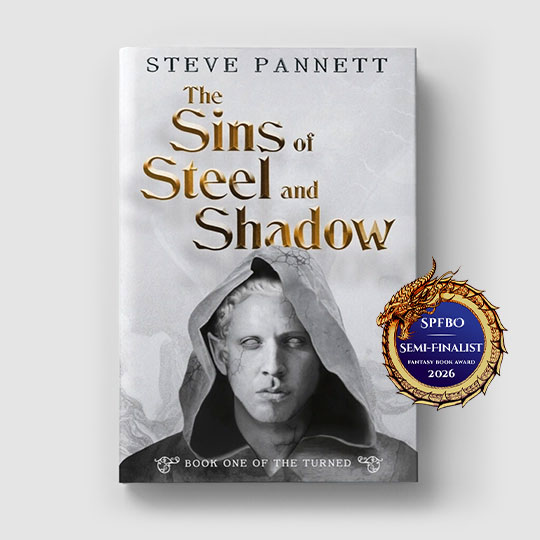
Book One of the TURNED
The Sins of Steel and Shadow
Hated and reviled by humans and vampyrs alike, every day for a Turned is a deadly struggle. But when Bail is offered the chance of a lifetime, there’s much more at stake than just his survival.
The Turned series is a fast-paced, character-led, gritty fantasy saga for fans of Joe Abercrombie or Scott Lynch.

Steve Pannett is an author and designer based in Yorkshire, UK.
He writes primarily in the fantasy genre, combining character-led storytelling with epic, gritty world-building to create dark tales with plenty of action and lots of twists along the way.
He has self-published multiple books and is active online.