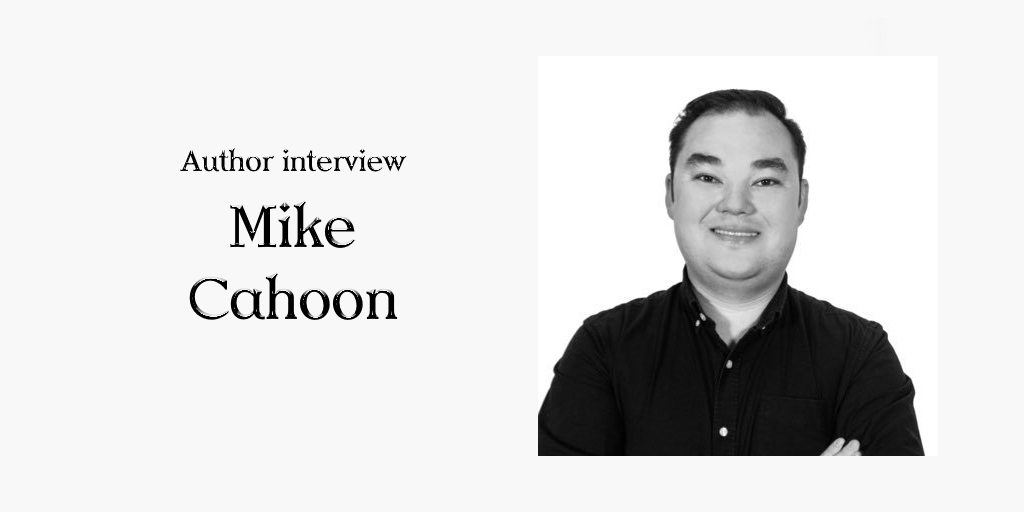
As part of an ongoing series of posts, I sat down for a (virtual) meeting with another indie author in the fantasy genre. Here’s how my chat with Mike Cahoon went.
The interview
Introductions and on reading
Steve Pannett (SP): Mike, nice to meet you — do you want to start by introducing yourself and your work?
Mike Cahoon (MC): For sure! I’m Mike Cahoon. I’m a brand new indie author. I launched my first book in October of 2025— it’s a dark fantasy aimed at adults. It’s kind of along the lines of Game of Thrones or First Law or something like the Licanius trilogy. The short pitch is that it’s set during a burgeoning age of exploration and it’s all about a conspiracy that gets uncovered during a daring heist. This conspiracy has world-changing ramifications, so it’s all about the political intrigue and the dynamics and interplay between the various characters and the various nations and how this conspiracy kind of changes everything in this world. It’s multi-POV and it’s the start of a trilogy.

On writing
SP: Amazing. So do you have that whole sequence already planned out, even just in note-form?
MC: I have a bit of an outline, but I feel like I’m a very character-first writer. So I kind of let the characters inform the plot. If you have a really strong sense of who your characters are and what they’re going to do in a given situation then I feel like they kind of tell you the direction of the plot — as weird as that sounds!
SP: Not at all. I write the exact same way! Characters—that you yourself created—always have the capacity to surprise you, right!?
MC: For sure. And I think that it makes a big difference for readers — because I feel you can tell a lot of times when a writer is really trying hard to stick to a prescribed outline. It doesn’t feel like things are that surprising. You almost know what’s going to happen. You kind of can tell how the whole story is going to go.
SP: Yeah absolutely, I’m all for having a direction of travel, but not necessarily writing to a set plan.
Ok then, take me back to the very start. What’s your earliest memory of reading? How do you think it influenced you?
MC: So my dad is a big reader, and he and my mom got me into a lot of the fantasy and sci-fi and all that stuff early on. They really encouraged me and my brother to read a lot and as a kid I read all sorts of books. I mean obviously there was the classics—Harry Potter and the Hobbit—but I was hugely into Redwall, Paul and Tamora Pierce, and Artemis Fowl. Just all these different great series of books that were really, really well written and just really instilled that sense of reading for the enjoyment of reading.
Then as I got older, having my brother and my dad kind of as a built-in community was really really a huge thing for continuing it. We would read books like The Dresden Files or the Shannara books and we would pass them back and forth. So I would read it and then my brother would read it and then my dad would read it — and then we would talk about it together. So it was really kind of a cool thing, and it’s been a thing my whole life where I’ve been into reading all these different books.
And not just books but movies and other stuff too. We watched all of the Lord of the Rings movies in theatres. We watched Star Trek on TV — so, I think wanting to be a reader has been a part of my whole life. And then writing kind of was just like a natural evolution of wanting to tell my own stories.
SP: Yeah one hundred percent. I can relate to a lot of that. And those formative experiences are so important — gotta shape a love of stories from the get-go! What about the journey from writing to publishing then, talk me through that.
MC: So I actually majored in writing at school; literature and writing. And it’s funny because I enjoyed writing and I loved it and I did a lot of it. And then I decided I wanted to get into being a firefighter when I got out of school. So I kind of put the whole writing thing to the back of my mind. I always thought “I’m going to try to write a book one day” — and I did write through my 20s, but it wasn’t until I was in my early 30s—and me and my wife had our first kid—that I was really like,I need to take this seriously if I want to do this.
It’s one of those things where it’s easy to write for yourself, and it’s easy to start books and then just never really commit to it. If you had access to my computer, I have a bunch of unfinished manuscripts that I’ve started and then just never done anything with.
So my first goal wasn’t even to publish something. I was like “I’m going to finish one manuscript.” It took me about a year — and then it took me another year to figure out how I was going to publish. Editing, getting a cover, doing all that stuff. But yeah, the big turning point for me was really realising that if I wanted to do this—even as a hobby—then I needed to actually commit to it, and not just constantly say I’m going to do it “one day.”
SP: That’s such a parallel to my own experience. Lots of half-finished projects, then a defining moment where you think “I’m gonna do this properly” just to see what happens.
MC: Yeah. And then in terms of publishing, I didn’t know a lot about publishing at all, at first. Then when I looked into the different routes I thought that self-publishing sounded right for me. I wanted to publish my books without a lot of cooks in the kitchen, and without a lot of people trying to tell me how they wanted it to be “more like this” or “less like that.”
It’s a lot of work. It’s a huge learning curve, but it’s cool, too. I made my own website, I’ve hired the cover designer, editors, all that stuff. It’s like learning a whole trade. It’s very interesting and I really enjoy it.
SP: For sure. It’s a huge amount of work, but yeah it’s a lot of fun, too. I think you’ve gotta lean into it if you’re gonna make something of it.
Talk to me about your writing process now. Have you got any set rituals for when you sit down to write?
MC: The biggest thing as far as writing goes, is just trying to be as flexible as possible. I keep a lot of notes on my phone so that it’s easy to just jot things down. That’s really helpful.
Then if I have a few minutes, I can just write down the intro to a scene or part of a chapter or whatever — so that when I do have the time to actually sit down and write, it’s like I’m working with some sort of building blocks. I’m not just staring at a blank page.
SP: I find it so fascinating when speaking to other parents about this…because we all have this same juggling act when it comes to our writing!
MC: Yeah! It’s like (before kids) you could go to the gym for two hours and go at the same time every day, no problem. Once you become a parent, it’s like you just have to carve out what little bits you can here and there. The same goes for writing.
SP: Absolutely. What about when you hit a wall, then? Do you have any methods for getting around a tricky patch in your writing?
MC: Not necessarily methods or tricks, but just starting somewhere is always helpful. Rough notes are always gonna be better than staring at a blank page.
And, after that, I think—with writing—it’s important to create momentum and then maintain momentum. As best you can, anyway.
SP: Sound. You mentioned earlier your love of characters — do you have a favourite character who you’ve brought to life on the page?
MC: It’s hard because I like all of my characters for different reasons. So, I really enjoy writing characters that come from a lot of different backgrounds and have a lot of different motivations. I like being able to get into the different headspaces of different characters with very different personalities.
I also think it’s important not to have favourites — because, if you have a favourite, you might end up changing the story to fit them more. I think you need to let the story be shaped by what they would actually do and the consequences they would suffer for their actions.
SP: I get what you mean. You don’t want to accidentally end up being a guardian angel or something, right?
MC: Right.
SP: Ace. So tell me about (Mike’s debut novel) The Scion Conspiracy then? What do you want readers to take away from it? Do you prioritise a message or a theme, or do you just focus on the story?
MC: So I think first and foremost it’s an entertaining story. I do think it’s important to try to have some sense of theme and, consistency in your stories because it makes the experience hit harder if you have some sort of thematic through-line — but I will say all of that should be secondary to telling an entertaining story.
I do think I’m trying to explore a lot of how people make decisions in a world that is very much…uncaring and driven by the power dynamics at play and how individuals have to come to terms with what they might want, versus the realities that they’re faced with. Or what their goals are, versus what they actually have to do in order to attain those goals.
I mean, I think the best work, the best fiction is—no matter how weird the world you create is or how strange the different magic systems and stuff are—somehow a reflection of the conflicts and the trials and stuff that we face in our everyday lives.
That’s what makes fantasy and sci-fi and all this genre fiction so valuable for readers — it’s that you’re taking the struggles that a person might face in their real life and you’re dialling up the situation to 11.
SP: Yeah I wholeheartedly agree. These genres are so expansive, but they can be so much more grounded and real than a casual observer might think.
So speaking of the genre(s) then. Are there any upcoming releases that you’re really looking forward to?
MC: I’m a big fan of The Dresden Files by Jim Butcher, so I need to get the latest one in that series. I’m also looking forward to the sequel to The Devils, by Joe Abercrombie, as I really enjoyed that one. (Sidenote; since Mike and I sat down to talk, the sequel to The Devils has been announced as The Heretics and is due for release in May of 2027)

On the future
SP: Ok cool. And what about yourself? What’s on the horizon for you?
MC: So, I am actually currently working on two things. I’m working on the sequel to The Scion Conspiracy, and then I’m working on a prequel novella which should be coming out pretty soon, hopefully halfway through this year I would say. I’m almost finished with it. I’m just kind of wrapping up the finishing touches but then I’ve got a lot of it depends on how long it takes to get through editors and cover making and all that stuff.
SP: That sounds amazing. I look forward to picking up a copy of both! Well thank you so much for your time, it’s been a genuine pleasure!
MC: Thank you. I really appreciate it!
My thanks to Mike for sitting down to talk to me. If you’re an author who wants to talk reading, writing, and all things books, please fill out this form.
Mike Cahoon is the author of The Scion Conspiracy, book 1 of The Crucible of Legacy. A prequel novella, The Coldwater Job, is on it’s way later in 2026!
📚✌🏻SP
Share this post
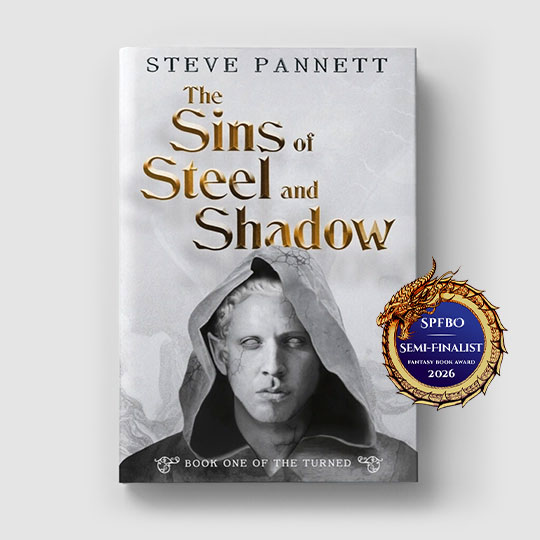
Book One of the TURNED
The Sins of Steel and Shadow
Hated and reviled by humans and vampyrs alike, every day for a Turned is a deadly struggle. But when Bail is offered the chance of a lifetime, there’s much more at stake than just his survival.
The Turned series is a fast-paced, character-led, gritty fantasy saga for fans of Joe Abercrombie or Scott Lynch.

Steve Pannett is an author and designer based in Yorkshire, UK.
He writes primarily in the fantasy genre, combining character-led storytelling with epic, gritty world-building to create dark tales with plenty of action and lots of twists along the way.
He has self-published multiple books and is active online.