There’s an oft-lamented saying in the music industry. It’s the ‘tricky second album’ conundrum. It references when an artist struggles to hit the same highs that they did with the follow-up to whatever was their critical/commercial breakthrough. Basically; having a burst of success makes creating the “next thing” more of a challenge. This is something that I can relate to, when I reflect on the writing process for my next release, The Ruin of Rage and Reckonings, Book 2 of The Turned series.
A personal success story
Now, before I begin this post in earnest, let me start by saying that I’m not claiming that the first instalment, The Sins of Steel and Shadow, was some kind of breakaway commercial hit. Indeed, if you’re measuring it by those standards then it’s safe to say that I’m not challenging to be on any bestseller lists! And nor do I make millions in sales of the book!
But I am very proud of that story. The book has—at the time of writing—made its way through as a semifinalist in this year’s SPFBO competition, and it commands a healthy average rating from bonafide readers who seem to genuinely connect with it, or be entertained by it—or both! But even both of those metrics aren’t really what I’m referring to, either (although they are lovely points-of-note, and they genuinely make me feel all warm and fuzzy).
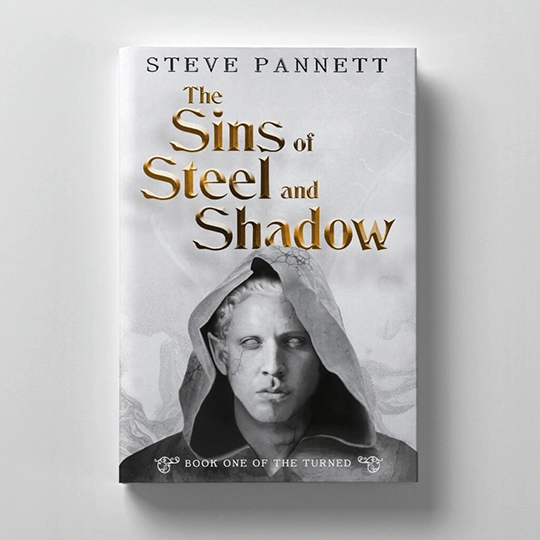
What I mean is that The Sins of Steel and Shadow (TSOSAS) felt like another huge step in my journey as a self-published author. It wasn’t my opening gambit, of course—that accolade belongs to my debut, The Hunter’s Lament, another book that I’m immensely proud of—but TSOSAS felt like a very different beast to write, edit, publish, and then market.
For starters, I knew from the jump that TSOSAS was going to be the beginning of a series. I didn’t know exactly how many instalments there would be (although I’m growing more confident that this sequence will now end up as a trilogy) but I knew that it needed to accomplish two things:
- Be a good book in its own right
- Be the start of something even bigger, too
With The Hunter’s Lament, I knew I could write it as both a standalone and leave it open-ended enough to return to at a later date, if I wanted to. [Sidebar: I will be returning to a follow-up at some point, having already written the first draft.]
But with TSOSAS I wanted to challenge myself to write a planned-for series. And the opening chapter of any new series has to both hook readers in and serve as a bloody good read on its own.
In my opinion, where a lot of fantasy series fall down is actually at this first hurdle. I’ve read too many “first books” that feel exactly like a “first book” and not much else. They’re a set-up. A lead-in to the next book, but with little real value or interest of its own. Personally, I really don’t like that approach. It reminds me too much of how Marvel Studios seem to approach their storytelling — most of the attention and effort feels like it goes on making the audience hunger for the next thing, rather than actually enjoying the current thing.
And while that is inarguably what some people like — that’s not for me.
So TSOSAS had a tall order to fill. I wanted to write a genuinely good, dark fantasy story. I wanted to introduce readers to a well-realised, gritty world, inhabited by nuanced and interesting characters. And I wanted it to kick-off what I knew would be at least two more novels in the sequence. And, dear reader, I am confident in saying that I accomplished all of those things, to the best of my abilities.
Riding high
So, when it came to writing book 2 in the series, I started with an energy level that I don’t think I’ve had in my writing before. I was so pleased with how TSOSAS had turned out (excuse the pun) that I was positively buzzing to write the next one. I felt unstoppable.
And that energy powered me through. I wrote the first draft for what would eventually become The Ruin of Rage and Reckonings (TRORAR) in just over three months. Over 200,000 words, blitzed out in a feverish cavalcade of storytelling. I fucking loved it. Tricky second book in the series? Not at all! I was killing it.
Then I did what my process usually dictates that I do: I walked away from that manuscript for a little bit. Partly to have a bit of a break (although I did write a short story and pick up some other projects in my “downtime”) but mainly because I believe in letting a fresh draft sit for a while. As its creator, I’m often way too close to the work to scrutinise it properly when it’s still fresh — so I like to leave it, then return at a later date when I’ve gained some distance.
My moment of uncertainty (and working through it)
So imagine my dismay when I returned to that draft and found that—while it was still decent—it wasn’t giving me the same vibes that I got from TSOSAS, or from writing the draft itself, for that matter.
What’s worse, I couldn’t figure out if it was the writing that was at fault — or if the high of writing and releasing TSOSAS had shifted my perspective so much that I was being overly critical of it. Too demanding, maybe. Admittedly, I did dismiss this second notion fairly quickly — I think most creative people are hyper-critical of themselves…but I also believe that’s part of what brings the best out of us.
I got over myself, then resolved to sort the draft out. So, with a more ruthless eye, I returned to the manuscript again. This time, I identified what I felt was the single biggest issue — and then I set about fixing it. Let me tell you now…that was a huge decision. It meant replacing nearly a third of the entire book. I actually stripped out an entire POV, removing an entire set of characters with it.
It was scary, but it was so, so necessary.
I have a golden rule when it comes to publishing: I will never publish something that I’m not satisfied with. And that first draft of TRORAR was on the borderline when I sat down to review it. I swayed between being happy and unhappy with it. That blurriness is what made me be ruthless with my rewrites…and it absolutely catapulted the book firmly into the territory that it needed to occupy. Because after that epic slog (rewriting 80,000 words is no small feat) I ended up with a story that I absolutely love.
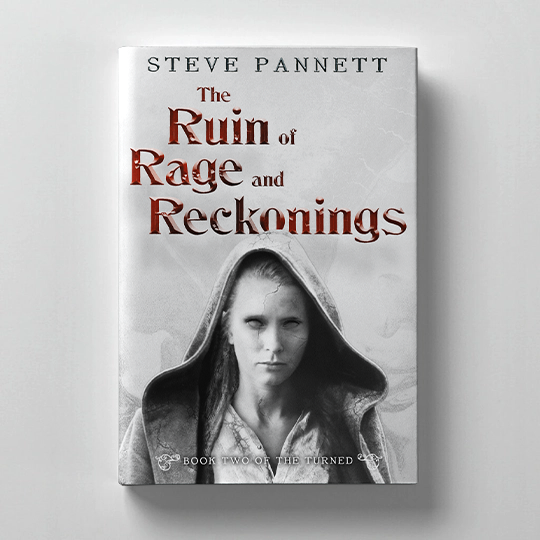
So, while writing TRORAR was a helluva challenge (probably my biggest challenge as an author to date) it was incredibly worthwhile, and it has produced a book—the second instalment of a series no less—that I am incredibly proud of. I genuinely cannot wait to get this story in front of readers.
So what did I learn?
The ‘tricky second *insert creative output here*’ trope is rooted in reality. Even if its not driven by external “success” – if you produce something you believe to be your best work, following it up is always going to be tough.
However, if you find yourself—as I found myself—musing on the quality of that follow-up, you should absolutely listen to your instincts. If it doesn’t feel like its hitting those same highs, don’t force yourself to think otherwise. Put the work in, hold yourself up to your own high standards, and you’ll end up with a sequel that you love just as much as the opener.
📚✌🏻SP
Share this post
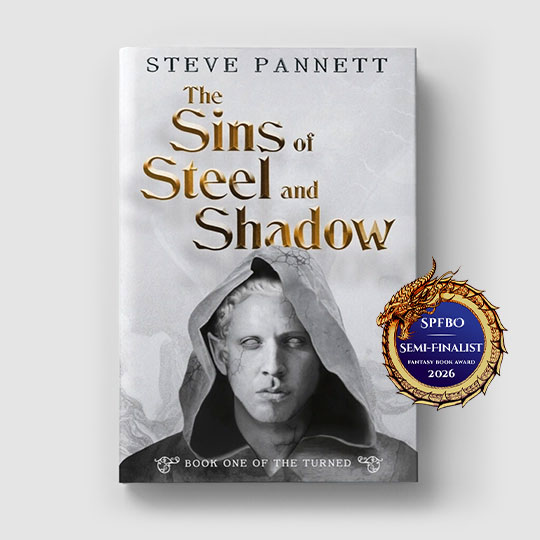
Book One of the TURNED
The Sins of Steel and Shadow
Hated and reviled by humans and vampyrs alike, every day for a Turned is a deadly struggle. But when Bail is offered the chance of a lifetime, there’s much more at stake than just his survival.
The Turned series is a fast-paced, character-led, gritty fantasy saga for fans of Joe Abercrombie or Scott Lynch.

Steve Pannett is an author and designer based in Yorkshire, UK.
He writes primarily in the fantasy genre, combining character-led storytelling with epic, gritty world-building to create dark tales with plenty of action and lots of twists along the way.
He has self-published multiple books and is active online.