The chances are, if you’ve ever tried your hand at writing fiction, then you’ve come across the following pearl of wisdom: Show, don’t tell.
But what does it actually mean? How do you put it into practice? And should you even care? Here are my thoughts on this tenacious snippet of advice for writers.

Should you care about “show don’t tell”?
The short answer is yes. It is, in my opinion, good advice. It does, however, require some nuance in its application. Like all good advice, it still requires some judgement about when, where, and how strongly you put it into practice.
“Show don’t tell” is a short refrain designed to stop writers from becoming overly descriptive and dull in their work. Essentially, it reframes how a story gets told, and makes it ultimately more interesting to any prospective reader.
If you were to write using just “tell” then your work would sound more like a narration than actual storytelling. You, as the writer, will take on the mantle of a documentarian, rather than someone with a creative voice. And a story told as a play-by-play of events, descriptions and literal depictions…is not a good story. You will commit that most cardinal of writerly sins: you will bore your reader.
So yes, you should care about “show don’t tell”, if you want to write engaging books.

How should you use “show don’t tell”?
For me, there are three main areas where I deploy “show don’t tell” as a writing tactic; they are World, Scene, and Dialogue. Here’s how I apply the advice to each of them.
World
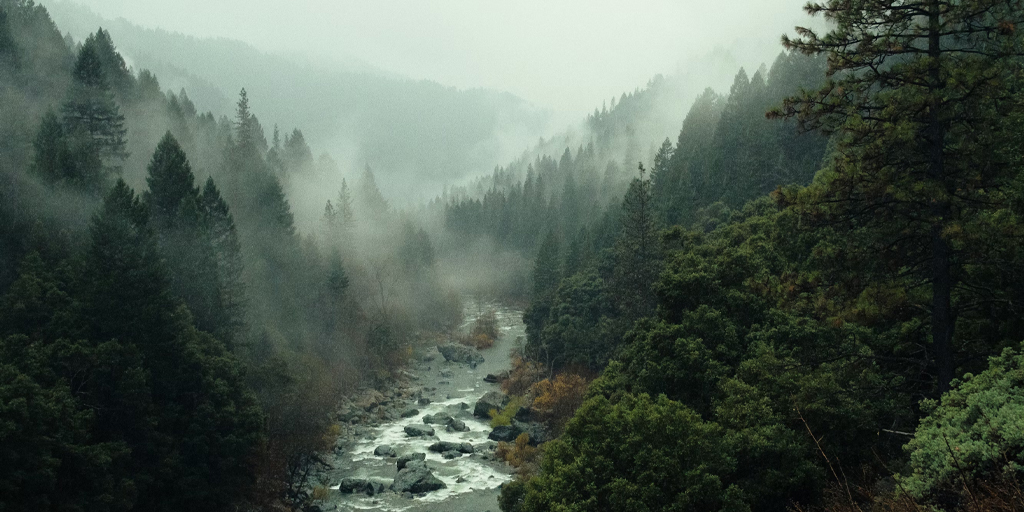
World-building is key to most fiction, but I think it’s especially important for my own chosen genre of fantasy (specifically, gritty/dark fantasy). This is primarily because your reader probably won’t have much by way of a frame of reference. Even if you’re writing about a world inspired by our own, or a retelling of something from history, there will be differences (some small, some vast) that will need to be conveyed to your reader. But keep your wits about you, because this can easily become a trap.
Let’s say your chosen world is completely alien from our own. It has its own geography, its own climate, and its own natural ecosystems. Those ecosystems will have their own flora and fauna, and their own wildlife. Your world will also have its own peoples (or whatever species you decide to create), and they will have their own cultures, their own histories, their own mythos…do you see where I’m going here?
There is a lot of stuff to get across to a reader who is just being introduced to your world. Bad writers will info-dump as much of this onto their reader at the earliest opportunity. And don’t get me wrong, I understand why. Creating a world is exciting, so the temptation to simply explain every aspect of what you’ve come up with is strong. After all, you want to share that creation with other people! You want them to be as excited about it as you are!
But your readers deserve better than an encyclopaedic view of your creation. They are, after all, here for a story, not a 200,000 word guidebook.
So when it comes to your World, try to apply “show don’t tell” where you can.
Is your world constantly battered by devastating storms? Don’t just tell me, put me in the middle of one and let it be known how common/unique the experience is. Is the culture of your new species extremely wary of outsiders? Don’t tell me, show me how they behave when they encounter strangers. Does that cute and cuddly animal actually have both the capacity and propensity to devour anyone stupid enough to go near it? Don’t tell me, show me.
The biggest problem here is always how much world-building you include. But the best written worlds are built-up over time. The world-building happens as the story progresses, not in a 100-page info-dump at the beginning of the book. Paradoxically, the best world-building happens when a reader becomes immersed in it, rather than simply reading about it.

Scene
So that’s world-building covered, but how does “show don’t tell” apply to writing a particular scene? Well, for me, its the same key principle, but it just makes for a more engaging moment.
When writing a scene, keeping your reader enthralled in what’s happening should be an underlying intention. You don’t want to break their immersion from the scene, or you risk losing them entirely. Let’s look at some (obviously trite) examples. In both cases, I’ll write about me sitting down to draft this blog post (I know, pretty meta, right?) First up is a scene that only uses “tell”:
Steve opens the office door. He sits at his wooden desk and prepares to write. The grey computer makes a 'bong' noise as it turns on. He has to wait for the document to load before he can begin writing his blog post. While he waits, he sits and looks out of the window. It is raining.
I know. Fucking yawn, right? The writing is clunky and over-stuffed with description. And, despite all that “telling” it actually tells us very little. Here’s a very quick revision for you:
Steve dropped into the chair behind his desk. The computer started up with a familiar bong and its ghostly reflection mirrored the sparkle in his eye. He tapped one finger against the side of his mouse, waiting. The sound echoed the thrum of the rainfall outside. A small smile broke out across his face as the document readied itself. He had a blog to write.
Still not exactly award-winning, but do you see the immediate difference? Suddenly there’s some pace to the writing. Some feeling. You can sense my excitement as I “drop” into the chair. You hear the computer starting up and you feel my impatient tapping against the mouse as I’m forced to wait. Not only that, but you learn a few extra things this way, too. That bong noise is described as ‘familiar’ – which suggests that I’ve done this before. The mannerisms I exhibit—dropping into chairs, the (cliché) bright spark in my eyes, my impatient tapping and, most telling of all, actually smiling as a word processor kicks into gear—suggests that I am a bit manic, too. This, combined with the familiarity, shows that I am eager and excited to write this blog. It’s not overt, but it’s there. It’s background showing that gives you a sense of my character, without ever just telling you anything about me.
There was more I could’ve done, too. I trimmed the fat (useless details about desks being wooden or computers being grey) but I could’ve added in some other bits and pieces, too. The best part of “show don’t tell” when it comes to a scene is that you can make use of all of the five senses. If you’re just telling then it limits you mainly to describing what can be seen; but if you’re showing your reader a scene then you can introduce sounds and smells in a much more natural way. I didn’t do that for this silly little example, but it’s something that I lean on a lot in my books. Utilising all of the senses is particularly useful in fight scenes, where the default tendancy can be to focus on what’s visually happening. But nothing paints a dire scene better than the wet crunch of a bone breaking, the cloying stench of mud clogging your character’s nostrils, or the coppery taste of blood in their mouth as they take a mailed fist to the face.
So, my best advice is to reread every scene you write and consider this question: am I telling my reader what to see, or am I showing them an immersive experience?

Dialogue
My last application of “show don’t tell” is Dialogue.
Writing dialogue is hard, but it’s also integral to good writing. Some writers are brilliant at world-building and have wonderful prose, but their understanding of dialogue is atrocious. It’s not a quick fix, but by applying “show don’t tell”, you’ll equip yourself with some of the tools you need to sharpen your skills in this area.
For dialogue, “show don’t tell” can take away that awkward, wooden feeling that you might be sensing in the spoken exchanges between characters. One of the main offenders here is the adverb, which I am not a fan of (something I share with Stephen King, if you’ve read his book On Writing before).
An adverb is a word that modifies a verb, adjective, or another adverb, providing context about how, when, where, how often, or to what degree an action occurs. They are mostly—but not always—crutches. They are quick and dirty ways of communicating with your reader. They are telling. Here’s an example:
'I'll always be there,' he said, lovingly.
---
'I'll always be there,' he said, menacingly.
The same spoken words, but with a different adverb after the dialogue tag. The meaning is changed completely, but they both still suck. And they suck because they’re lazy.
There are dozens of ways you can communicate how this phrase is being said, or what meaning is applied to it. Most of those ways would be showing, not telling. And any one of them would likely be an improvement on using an adverb.
'I'll always be there,' he said, holding her gaze.
---
'I'll always be there,' he said, his fists clenched tightly at his sides.
They’re still not great—and the first one could be influenced by the context of the lines that come before/after it—but they’re already an improvement on what came before!
There’re additional benefits to showing, rather than telling, your reader something in the middle of dialogue, too. The more that you flesh out your characters, the easier it becomes to start dropping dialogue tags away entirely. If they have characteristics or traits that have been established as being unique to them, then sometimes that’s all you need to indicate who is speaking. The same goes for their vocabulary. Remember that not all of your characters will have the same breadth and depth to their lexicon as one another. Maybe one of your characters uses the same word often, or perhaps they even misuse something with regularity. By introducing and establishing these character-based norms, you can start to phase out using their dialogue tags during longer back-and-forths.
By showing a character’s traits, you can—sometimes, not always—bypass the need to label them as the speaker. This solidifies that established characteristic, as your reader will make the connection between it and the speaker, without ever having seen their name attributed to the speech. This makes for a more immersive experience for them.
Sidebar: I will probably pen an entire post/series on writing dialogue, as I really enjoy doing it and I firmly believe that it is often the part of a novel that makes or breaks a story.

Conclusion
There is a reason that “show don’t tell” has enjoyed such longevity among writerly folks. It is, by all accounts, a very sage and wise piece of advice. And I would encourage you to start applying it to your Worlds, your Scenes and your Dialogue.
It’s not a magic bullet, of course. There is no magic bullet, when it comes to writing – there is only practice. But I guarantee that if you practice applying this guidance to those three areas, you will find yourself weaving ever more interesting and engaging experiences for your readers.
And, after all, isn’t that the point of being a storyteller?
📚✌🏻SP
Share this post
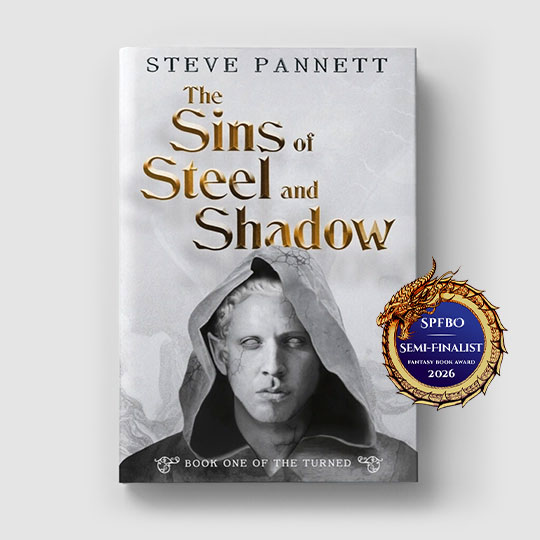
Book One of the TURNED
The Sins of Steel and Shadow
Hated and reviled by humans and vampyrs alike, every day for a Turned is a deadly struggle. But when Bail is offered the chance of a lifetime, there’s much more at stake than just his survival.
The Turned series is a fast-paced, character-led, gritty fantasy saga for fans of Joe Abercrombie or Scott Lynch.

Steve Pannett is an author and designer based in Yorkshire, UK.
He writes primarily in the fantasy genre, combining character-led storytelling with epic, gritty world-building to create dark tales with plenty of action and lots of twists along the way.
He has self-published multiple books and is active online.